

Atlanta Commercial Network Cabling and Telecom Services
Since 1998, DataTel 360 has designed, installed, tested, certified and documented commercial structured cabling, Cat6A and fiber optic infrastructure for warehouses, medical facilities, corporate offices, schools and distribution centers across metro Atlanta — then stayed on the phone for the next decade of moves, adds and changes.
What makes a network cabling company the best choice in Atlanta?
The best network cabling company in Atlanta is the one that designs to ANSI/TIA standards, installs with a dedicated commercial crew rather than subcontracted labor, certifies every copper and fiber link with calibrated test equipment, hands over labeled as-built documentation, and backs the work with a manufacturer performance warranty. DataTel 360 has met that bar for Atlanta businesses since 1998 — across structured cabling, Cat6/Cat6A, fiber optic backbones, data centers, enterprise Wi-Fi, business phone systems and low voltage.
In one line: cheap cable is common; a certified, documented, warrantied network is not. Request a quote or call 770-441-9999.
On this page
- Why Atlanta businesses choose us
- Commercial network cabling services
- Structured cabling & Cat6/Cat6A
- Fiber optic installation
- MDF & IDF network closet buildouts
- Warehouse & distribution cabling
- Business phone systems & telecom
- Atlanta low-voltage services
- How to choose a cabling company
- Our project methodology
- Testing, certification & warranty
- Industries we serve
- Metro Atlanta service areas
- Customer success stories
- Frequently asked questions
- Get a quote
Atlanta doesn't have a cable shortage — it has a craftsmanship shortage.
Businesses searching for the best network cabling company in Atlanta need a contractor with commercial cabling, fiber optic, telecom and project-management experience. DataTel 360 has served Atlanta organizations since 1998, providing structured cabling, Cat6 installation, fiber backbones, network closet buildouts, business phone systems and low-voltage infrastructure.
Search for network cabling in Atlanta and you will find hundreds of companies willing to pull wire. Cable is a commodity. Connectors are a commodity. What is not a commodity is the judgment that decides where the telecom room goes, how the pathway is routed around the HVAC run, and whether that ceiling bundle will still pass a channel test after somebody's ductwork gets replaced in 2029.
The same judgment decides whether anyone can find the far end of a cable three years from now without a ladder and a tone generator. It is the difference between a network that quietly works and one that becomes a recurring line item on your budget.
We have spent more than two decades walking into Atlanta buildings and untangling what a low bid left behind. A warehouse off I-285 with a mezzanine nobody documented. A medical suite in Sandy Springs with a network closet sharing a wall with an imaging room. A Gwinnett County distribution center that grew from 60,000 to 200,000 square feet without anyone updating a drawing.
The cable itself was rarely the problem. The problem was that nobody designed anything, nobody tested anything, and nobody wrote anything down.
DataTel 360 has been an Atlanta company since 1998. We design and install commercial structured cabling, Cat6 and Cat6A copper, single-mode and multimode fiber optic backbones, data center and network closet buildouts, enterprise Wi-Fi, business phone systems, and the low voltage cabling that carries access control and security cameras. We work directly for businesses, and alongside general contractors, electrical contractors, property managers and managed service providers. This page is the long version of how we do that work — written so that whether you hire us or not, you will know what to ask for.
Who this page is for
If you are an IT director planning a headquarters move in Alpharetta, a facilities manager who inherited an undocumented network closet in Marietta, a general contractor bidding a Cobb County tenant improvement, or an operations lead trying to get scanners to work in every aisle of a Norcross warehouse — you are the reader we wrote this for. You do not need to become a cabling expert. You do need enough vocabulary to tell a real proposal from a cheap one.
Key takeaways
- Structured cabling is a 15–20 year asset; switches and access points are 5-year assets. Design to the longer horizon.
- ANSI/TIA-568 sets performance; TIA-569 sets pathways; TIA-606 sets labeling. A proposal that mentions none of these is a guess.
- Cat6A is the practical default for new commercial work — it protects PoE budgets, Wi-Fi 6E/7 uplinks and 10G reach.
- Certification is not "we plugged in a laptop and it worked." It is a calibrated tester report for every link, delivered to you.
- Documentation — labels, as-builts, rack elevations, port maps — is what makes year three cheap instead of expensive.
- Warranty coverage requires a certified installer and passing test results. Ask for both in writing before you sign.
Request a Quote
Describe the building and what has to work when you open the doors. We will handle the technical part.
Get a QuoteCall 770-441-9999
Scoping a move, a buildout or a problem you cannot pin down? Call and describe it in plain English.
Call NowEmergency Repairs
Severed fiber, dead backbone, flooded closet, cut trunk. We respond to Atlanta emergencies 24/7.
Emergency SupportWhy Atlanta Businesses Choose DataTel 360
Anyone can win one job on price. Staying the cabling company a business calls for fifteen years takes something else. Here are nine reasons our clients keep our number in their phone, not their file.
Atlanta since 1998
We are not a national franchise with a local phone number. We are an Atlanta company that has watched this market's buildings, codes and traffic patterns change for over 25 years.
Our own crews
The people on your ceiling are our employees, trained to our standard. We do not hand your building to whoever answered a labor ad this week.
Standards-based design
ANSI/TIA-568 performance, TIA-569 pathways and spaces, TIA-606 administration, TIA-607 bonding. Standards are not paperwork; they are how a network survives its second decade.
Certification, not vibes
Every copper permanent link is certified with a calibrated Fluke-class tester. Every fiber strand gets an optical loss test, and OTDR traces where the design warrants it. You get the reports.
Documentation you can hand to anyone
Labeled ports, rack elevations, as-built drawings, port-to-outlet maps and test reports. If we vanished tomorrow, your next vendor would know exactly what they inherited.
24/7 emergency response
Fiber cuts and dead backbones do not wait for Monday. Atlanta clients get a real person and a truck, not a ticket number and a queue position.
One number, many buildings
Headquartered in Atlanta, deploying nationwide. Multi-site companies get one scope, one standard and one point of contact instead of twelve local vendors and twelve labeling schemes.
Cabling, fiber, voice and Wi-Fi under one roof
The cable, the closet, the access points, the phone system and the camera drops are one system. Buying them from four vendors is how the finger-pointing starts.
We finish, then we clean up
Dressed bundles, closed ceilings, firestopped penetrations, hauled debris, and a walkthrough with a human being. Your building looks better than we found it.
"You are not buying cable. You are buying the next fifteen years of not thinking about cable."— How we describe the job to every new client
Commercial network cabling services in metro Atlanta.
Design, installation, testing, certification, documentation and support — for copper, fiber, voice, wireless and low voltage. Every service below is delivered by DataTel 360 crews to the same standard.
Structured Cabling
Cat5e, Cat6 and Cat6A voice and data drops, patch panels, and horizontal cabling designed to ANSI/TIA-568 and certified link by link.
Copper cabling detailFiber Optic Installation
Single-mode and multimode backbones, fusion splicing, OTDR testing and Tier 1/Tier 2 fiber certification for campuses and buildings.
Fiber detailData Center, MDF & IDF
Network closet design, rack and cabinet installation, cable management, backbone tie-ins, bonding and clean, serviceable buildouts.
Buildout detailWi-Fi, Voice & Low Voltage
Enterprise Wi-Fi cabling and design, cloud VoIP, Microsoft Teams Phone, access control and camera infrastructure.
Wireless & voice detailEverything we install, in one list
Scopes ranging from a twelve-drop office refresh in Decatur to a phased, multi-building campus backbone. If it carries data, voice, video or signal in a commercial building, it is in scope.
Structured Cabling for Atlanta Businesses
The part of your network with a twenty-year lifespan — and the one most worth getting right the first time.
Structured cabling is a standardized, building-wide telecommunications cabling system built from defined subsystems — entrance facility, equipment room, backbone cabling, telecommunications rooms, horizontal cabling and work area outlets — installed to ANSI/TIA-568 so that any application (data, voice, wireless, cameras, building controls) can run over a common, tested, documented infrastructure.
The alternative — "point cabling," where someone runs a wire from wherever the device is to wherever the switch happens to be — is faster and cheaper on day one and expensive every day after. Structured cabling costs slightly more up front and turns every future change into a patch cord instead of a project.
In practice, a DataTel 360 horizontal cabling design starts with the telecom room location, because everything else follows from it. TIA-569 pathway rules and the 90-meter horizontal limit define a service radius around each room; that radius, not the floor plan's aesthetics, determines how many rooms a building needs and where they belong. Get that decision wrong and no amount of good cable rescues it.

Caption: Terminations dressed, labeled to ANSI/TIA-606-C and certified before handover — an Atlanta commercial network closet built by DataTel 360.
Cat6 and Cat6A Installation
Cat5e vs Cat6 vs Cat6A: choosing the right copper for an Atlanta commercial build
This is the single most common question we answer, and the honest version is short: for new commercial construction, specify Cat6A unless there is a documented reason not to. Everything else is a compromise you will meet again later. Here is the reasoning in table form — the version you can put in front of a CFO.
| Category | Bandwidth | Practical speed | PoE behavior | Best used for |
|---|---|---|---|---|
| Cat5e | 100 MHz | 1 Gbps to 100 m; 2.5 Gbps often works but is not guaranteed | Supports PoE/PoE+; heats more in large bundles, which erodes headroom | Adds and changes on an existing Cat5e plant; short-horizon leases; low-density voice runs |
| Cat6 | 250 MHz | 1 Gbps to 100 m; 10 Gbps limited to roughly 37–55 m depending on alien crosstalk | Better than Cat5e; still bundle-dependent for PoE++ loads | Budget-constrained office refits; buildings where the switch closet is genuinely close to everything |
| Cat6A | 500 MHz | 10 Gbps to the full 100 m channel | Largest conductors and best thermal performance; the safe choice for 802.3bt (PoE++) and dense bundles | The default for new commercial work — Wi-Fi 6E/7 access points, cameras, PoE lighting, medical, any 15+ year building |
Distances reflect ANSI/TIA-568.2-D channel guidance and field experience. The 100 m channel budget is 90 m of horizontal cable plus up to 10 m of patch cords — a detail that quietly breaks more installs than any other.
The material cost difference between Cat6 and Cat6A on a typical Atlanta office floor is a rounding error next to labor, ceiling access and downtime. The cost difference of re-pulling that floor in 2031 because Wi-Fi 7 uplinks and PoE lighting arrived is not. Spend the delta once.
What we install, specifically
- Cat6A — shielded (F/UTP) or unshielded, plenum (CMP) or riser (CMR) rated to match the space
- Cat6 — where budget or scope genuinely calls for it, with the tradeoff documented
- Cat5e — matching adds and changes to existing plant, and voice-only applications
- Patch panels — 24/48-port, angled or flat with horizontal managers, port-mapped to outlets
- Work area outlets — keystone jacks, faceplates, surface boxes, floor boxes, poke-throughs
- Pathways — cable tray, basket tray, J-hooks, conduit stubs, sleeves and firestopped penetrations
The details that separate a good copper install from a passing one
Bend radius respected at every transition — four times cable diameter for UTP, and no zip-tie cinched hard enough to deform the jacket. Pull tension kept under 25 lbf so the twist geometry survives the pull. Separation maintained from fluorescent ballasts, motors and parallel power runs. Bundle sizes kept sane so PoE heat can leave. Jacket rating matched to the plenum space rather than to what was on the truck. None of these are visible after the ceiling closes, which is exactly why they are the things a cheap bid gives up first.

Fiber is where shortcuts show up — usually eighteen months later.
Copper forgives sloppy work for a while. Fiber does not. A splice with 0.4 dB of loss instead of 0.05 dB passes a light test on day one and starts dropping links the first hot August afternoon when the optics are already at margin. We install single-mode and multimode fiber the way the physics requires: cleaved, fusion-spliced, inspected, loss-tested, and OTDR-traced where the design warrants it.
Fiber Optic Installation and Repair
Single-mode, multimode, and knowing the difference across Atlanta
Fiber shows up in three places in a commercial building: the backbone between telecom rooms, the risers between floors, and the runs between buildings on a campus. It shows up for two reasons — distance, because copper stops at 100 meters and fiber does not, and capacity, because a fiber pair installed today will still be relevant when the switches on both ends have been replaced three times.
| Fiber type | Typical use | Why we specify it |
|---|---|---|
| OS2 single-mode | Campus backbone, building-to-building, ISP handoff, long risers | Effectively unlimited reach and capacity for a commercial campus; optics have gotten cheap enough that the old "single-mode costs more" objection has largely evaporated |
| OM4 multimode | In-building backbone, MDF-to-IDF, data center rows | Cost-effective 10/40/100G over short distances with proven transceivers |
| OM3 multimode | Existing plant extension, shorter in-building runs | Matches installed base; we extend it rather than mixing types mid-link |
| OM5 wideband | Specialized higher-density multimode designs | Where SWDM is genuinely in the roadmap — not as a default upsell |
| Armored / OSP | Underground conduit, aerial, warehouse floors, exterior campus runs | Rodent, moisture and crush protection between Atlanta buildings and yards |
Fusion splicing
We fusion-splice rather than default to mechanical splices wherever it matters. A fusion splice fuses the glass cores into a continuous path with typical loss around 0.02–0.10 dB; mechanical splices and field-installed connectors are convenient but sit higher and less predictably on the loss budget. On a backbone that will feed every switch in the building for fifteen years, that difference is worth the splice trailer. Every splice we make is recorded, and every tray is labeled so the next technician is not guessing.
OTDR testing
An OTDR (Optical Time Domain Reflectometer) fires a pulse down the fiber and reads the light that scatters and reflects back. The result is a trace that shows every event along the run — each splice, each connector, each bend, each break, with a distance to it.
In practice, it is the difference between "the link is down somewhere" and "the link has a 1.9 dB event 143 meters in, right where the conduit turns under the parking deck." We use OTDR traces for acceptance on backbone and outside-plant fiber, and as the first tool out of the truck on an emergency fiber call.
Tier 1 (basic) uses an optical loss test set to measure end-to-end insertion loss and length against the calculated loss budget — it answers "does this link pass?" Tier 2 (extended) adds an OTDR trace of every event along the link — it answers "why does it pass, and what will fail first?" For backbone, campus and outside-plant fiber, we recommend Tier 2. For a short MDF-to-IDF hop inside one building, Tier 1 is often sufficient and we will say so rather than sell you a test you do not need.
Fiber certification and the loss budget
Certification is not a formality. Before we pull a strand, we calculate the loss budget for the link: connector pairs, splices, and cable attenuation over distance, compared against what the optics on both ends can tolerate. After installation, we measure the actual loss and compare it to that budget.
If a link passes but sits at 80% of budget, we say so — because that is the link that will fail when someone adds a patch panel in three years. Connector end-face inspection is part of every fiber acceptance we do; contamination on a ferrule is the most common cause of "brand new fiber that does not work."
MDF and IDF Network Closet Buildouts
Data center cabling, MDF and IDF buildouts, and network closet design
A telecommunications room is a machine, and like any machine it can be built to be serviced or built to be endured. We build them to be serviced. That means the rack layout is planned before anything is mounted, growth space is designed in rather than discovered later, and the person who opens that door in 2033 can trace any circuit without pulling a single cable out of a bundle.
MDF buildouts
The main distribution frame is the building's spine: carrier demarcation, core switching, the head end of every backbone run, and usually the phone system. We design MDFs with the boring things that matter — adequate power with the right receptacles, a proper telecommunications grounding busbar bonded per ANSI/TIA-607, cooling that accounts for the actual heat load, plywood backboard where it is needed, and physical room for the equipment that will be added after we leave.
IDF buildouts
IDFs (intermediate distribution frames) are where the 90-meter rule turns into architecture. Each IDF serves a zone of the building; the zone geometry, not convenience, decides its location. We place IDFs to keep every horizontal run comfortably inside the standard while keeping the backbone path clean, then build each one to the same specification so the sixth closet looks exactly like the first.
Network closet design
Nearly every Atlanta building we walk into has at least one closet that started as a good idea and became a hazard: cables entering from four directions, patch cords hanging in a curtain, no labels, a switch balanced on a cardboard box, and a mop stored under the rack. Redesigning that space typically costs less than one serious outage. We plan pathway entry, dressing, slack management, patching topology and labeling before we mount hardware.
Rack installation and cable management
Two-post and four-post racks, wall-mounted and floor-standing cabinets, seismic and standard base plates, properly bonded and properly anchored. Then the part most people never see quoted: horizontal and vertical cable managers, dressed bundles with strain relief, service loops sized so a panel can actually be pulled forward, patch cords cut to length instead of coiled in a nest, and a rack elevation drawing that reflects reality.
"If a technician can stand in your telecom room, read a label, and touch the right cable in under thirty seconds, everything upstream of that moment was designed correctly."— DataTel 360 project standard
Warehouse and Distribution Center Cabling
Warehouses, offices and plants are three buildings with three different problems. Knowing which constraint matters where is what twenty-five years in Atlanta buys you.
Warehouse and distribution center network infrastructure
Warehouses and distribution centers punish assumptions. Ceilings are 30 to 40 feet up, racking moves, forklifts hit things, dust coats everything, and the temperature swings twenty degrees between the dock doors and the mezzanine office. Copper distances that look fine on a floor plan turn into 90-meter violations the moment the cable has to climb to the deck and come back down. We design warehouse cabling around fiber-fed IDF zones so every barcode scanner, access point, camera and printer sits inside a workable radius — and we mount to structure, not to somebody else's conduit.
- Fiber-fed zone IDFs instead of heroic copper runs from a single closet
- Deck-mounted pathways and protected drops down to equipment
- Cat6A to every access point — high ceilings mean AP density is precious
- Rack-to-rack coordination so a racking reconfiguration does not shear a drop
- Rugged terminations for dust, vibration and temperature
- Coverage design for scanners across aisles, not just for laptops in the office
Office network infrastructure
Offices are about density and disruption. The cabling is straightforward; working around 200 people who need their phones and monitors on Monday morning is not. We phase office work — floor by floor, wing by wing, or after hours — and we cut over in a sequence that keeps the business running. Furniture-fed workstations, poke-throughs, floor boxes, conference room AV drops, and enough spare capacity that the next reorganization does not require us to come back.
Manufacturing facilities
Plants add electrical noise, physical hazard and uptime pressure. Machines have variable frequency drives that spray EMI across any parallel copper run; production lines cannot come down for a cable pull; and a bad connection stops product, not email. We use shielded copper and fiber where the noise environment demands it, route pathways away from motor and drive runs, and schedule around production rather than asking production to schedule around us.
Business Phone Systems and Telecom Services
The cable, the closet, the wireless and the phones are one system. Buying them from four vendors is how the finger-pointing starts.
Enterprise Wi-Fi infrastructure
Wireless is a cabling problem wearing a wireless costume. Every access point is a wired device, and coverage complaints almost always trace back to one of two things: AP placement chosen for convenience instead of for RF, or a cable that will not carry the PoE budget the AP actually draws.
So we design the wired side properly. That means Cat6A home runs to each AP location, placement based on the building's construction and use rather than a grid on a drawing, and PoE budgets calculated with switch capacity and cable heating in mind. Wi-Fi 6E and Wi-Fi 7 access points can draw enough power to make cable choice a real engineering decision, not a preference.
Business phone systems
We install and support business phone systems for Atlanta organizations of every size, and we come at it from the infrastructure side — which means the phones work because the network under them was built for voice, with the QoS, PoE and cabling to match.
Microsoft Teams Phone integration
Many Atlanta businesses already live in Microsoft 365 and want their phone system to be part of it rather than a separate bill and a separate app. We handle Teams Phone integration including Direct Routing, number porting, call flows, and the boring but critical part: making sure the local network, session border controller and internet path can actually carry the calls without the choppy audio that gets blamed on "the cloud."
Cloud VoIP
Hosted PBX and SIP trunking, migrated on a schedule that does not strand your main number. We port numbers, build call flows and auto attendants, configure handsets and softphones, and — critically — validate the LAN, WAN and QoS before cutover instead of discovering the problem with a customer on the line.
The cable, the closet, the Wi-Fi and the phones are one system
When the network, the access points and the phone system come from one Atlanta team, nobody gets to blame the other guy at 4:45 on a Friday.
Atlanta Low-Voltage Infrastructure Services
Low voltage is the umbrella over everything that carries signal rather than line power: data, voice, access control, cameras, paging, intercom, audio-visual, building automation and sensors. As a licensed low voltage contractor in Atlanta, we install these systems to the same standard as the data network, because increasingly they are the data network — an IP camera and a workstation are the same drop with different equipment on the end.
Access control cabling
Card readers, door controllers, request-to-exit devices, maglocks, strikes and position switches — each with its own conductor count and distance limit, each needing to reach a panel that has to live somewhere sensible. We coordinate with your access control provider or integrator so the cabling is ready when their hardware arrives, and we document the door schedule so troubleshooting a single reader in 2030 does not require opening six ceilings.
Security camera infrastructure
Modern camera systems are PoE devices on your network, which makes camera cabling a network design question: PoE budget per switch, cable heating in bundles, NVR placement, storage bandwidth, and where the switch that feeds the cameras gets its uplink. We install the cabling and the infrastructure and coordinate with your security integrator on the rest.
Technology relocations, emergency repairs and project management
Technology relocations
Moving an Atlanta business is the highest-risk week your network will ever have. The cabling in the new space has to be finished, tested and documented before the trucks arrive. The phone numbers have to follow, the internet circuit has to be ordered far enough in advance to survive the carrier's timeline, and the old space has to be decommissioned without stranding the equipment you still need.
We manage all of it — new-space cabling and closets, equipment de-install and re-install, cutover sequencing, and a first-morning-open presence so the first person through the door has a dial tone and a network.
Start the network conversation the day you sign the lease, not the month you move. Internet circuits, number ports and permits run on their own clock. Nearly every "the cabling delayed our move" story we hear started as a circuit ordered six weeks late.
Emergency network repairs
Backhoes find fiber. Roofs leak into telecom rooms. Contractors cut trunks they did not know were there. Rodents chew through outside-plant runs behind a warehouse. When it happens, the clock is running against revenue, and the value of a cabling company is measured in how fast a competent human with the right test equipment is standing in your building. We respond to Atlanta emergencies 24/7 — locating the fault with an OTDR or TDR, splicing or replacing, testing, and restoring service, then telling you honestly what caused it and what it would cost to keep it from happening again.
Telecommunications project management
On larger jobs, the cable is the easy part. The hard part is the sequence: coordinating with the GC and the electrician so pathways go in before the drywall, hitting inspection windows, keeping the ceiling grid schedule, staging material through a loading dock shared by six trades, and reporting progress in a form a construction schedule can consume. Our project managers speak both languages — the RFI-and-submittal language of the construction team and the plain English an operations director needs.
Nationwide deployment capabilities
Multi-site companies headquartered in Atlanta have a specific problem: twelve locations, twelve local cabling vendors, twelve labeling schemes, twelve standards, and nobody who can answer "how is site 7 wired?" We deploy nationwide from our Atlanta base with one scope, one standard, one documentation format and one point of contact — so every site looks like the same company built it, because it did.
How to choose a network cabling company in Atlanta — including how to evaluate us.
This section is deliberately vendor-neutral. Ask these questions of every company you talk to. If a firm cannot answer them, the price on their proposal is not the number you will actually pay.
What should I ask a network cabling contractor before hiring them?
Ask five things: (1) Are your installers employees or subcontracted labor? (2) Which ANSI/TIA standards will this design meet? (3) Will you certify every link with a calibrated tester and give me the reports? (4) What documentation do I receive at closeout — labels, as-builts, rack elevations, port maps? (5) What warranty covers this, and what do I have to do to keep it valid? A contractor who answers all five clearly and puts them in the proposal is a serious contractor.
The eight-point evaluation checklist
- Employees, not day labor. Ask directly. Your ceiling is not a training ground.
- Named standards in the proposal. ANSI/TIA-568, 569, 606, 607 — not "industry standard."
- Certification included, not extra. Testing quoted as an add-on tells you it is optional to them.
- Real documentation deliverables. As-builts and rack elevations, listed as line items.
- Manufacturer warranty path. Which manufacturer, how many years, what registration requires.
- License and insurance. Georgia low voltage license, general liability, workers' comp — current.
- Commercial references at your scale. A residential portfolio does not predict a 200,000 sq ft DC.
- Someone answers at 2 a.m. Ask what happens on a Saturday outage. Listen for specifics.
A decision tree for your project
-
Is this new construction or an existing building?
New construction: get the cabling contractor into the design conversation before the electrical rough-in — pathways, telecom room locations and sleeve placement are decided in weeks that cost nothing and are extremely expensive to revisit. Existing building: start with a site walk, because the drawings are wrong. They are always wrong.
-
How long is your lease or ownership horizon?
Under 3 years: a Cat6 refresh of critical drops may be rational; document the tradeoff. Over 5 years, or you own the building: Cat6A and fiber backbone. You will be living with this decision through two or three switch generations.
-
What is the longest run in the building?
If any horizontal run approaches 90 meters of actual cable path — not straight-line distance on a floor plan, actual routed path with the vertical climbs — you need another telecom room, or you need to move the one you have. This single question reshapes more designs than any other.
-
What is going on the network in five years?
PoE lighting, higher-density Wi-Fi, more cameras, badge readers on more doors, building sensors. Count the drops you need today, then design pathways and closet capacity for meaningfully more. Empty capacity is cheap; new pathways through a finished ceiling are not.
-
Who will support this in year three?
If the answer is an internal team or an MSP, the documentation deliverable is not a nice-to-have — it is the entire difference between a fifteen-minute fix and a four-hour investigation. Insist on it in writing.
Common mistakes we are called in to fix
What good projects do
- Locate telecom rooms first, then design around the 90-meter horizontal limit
- Specify Cat6A for new work and fiber for anything between rooms or buildings
- Install pathways with capacity for future adds — tray and sleeves, not just what fits today
- Certify every link and keep the reports somewhere findable
- Label to ANSI/TIA-606-C at both ends, on the panel, and on the drawing
- Bond and ground racks and panels per ANSI/TIA-607
- Firestop every penetration as it is made, not at punch list
- Leave a real as-built the next vendor can read
What costs money later
- Putting the network closet wherever there was leftover space
- Buying Cat6 to save a few percent, then re-pulling for PoE lighting
- Running cable in the same tray as unshielded power, parallel, for 60 feet
- Skipping certification because "it works when we plug in a laptop"
- Labeling with a marker on tape that falls off in a year
- Zip-tying bundles hard enough to deform the jacket and kill NEXT margin
- Leaving penetrations unsealed until an inspector finds them
- Handing over a folder with a Visio drawing of the building as it was proposed, not as built
Five phases. No surprises. Every project, every time.
The sequence below is why our schedules hold. It is the same whether the job is twelve drops in a Decatur suite or a phased backbone across a Gwinnett County campus.
Site walk & discovery
We walk the actual building. Ceiling type, pathway options, existing closets, power, grounding, obstructions, and the things the drawings never show. We ask what the space is for, not just how many drops you counted.
Design & itemized proposal
Telecom room placement, pathway routing, cable specification, closet layout and a scope written in plain language with standards named and testing included. No mystery allowances.
Coordination & scheduling
Sequencing with the GC, electrician and other trades. Off-hours and phased work where the business cannot stop. Material staged before the crew arrives, not after.
Installation & workmanship
Our crews. Bend radius, pull tension, separation, firestopping, dressing and labeling done as the work happens — because it cannot be added later without pulling it apart.
Test, certify, document, hand over
Every link certified, reports delivered, labels verified against the as-built, rack elevations produced, warranty registered, and a walkthrough with the person who has to live with it.
Phases 1 and 2 are where money is saved or lost. A cabling company that skips the site walk and quotes off a floor plan is not being efficient — it is transferring risk to your change orders.
Testing, certification, documentation and warranty.
This is the section most cabling companies do not want you to read closely. It is the section we would like you to read twice.
Cable testing and Fluke certification
There are three things people call "testing," and only one of them is certification.
Continuity/verification confirms the wires are connected in the right order. A $40 tool does this. It proves nothing about performance.
Qualification tells you whether a link will probably support a given speed. Useful for triage, insufficient for acceptance.
Certification measures the link against the full set of ANSI/TIA-568 performance parameters — insertion loss, NEXT, PSNEXT, ACR-F, return loss, delay skew, wire map, length — with a calibrated tester, and produces a pass/fail report with margins for every single link. That is what a Fluke-class certification tester does, and that is what we do on every permanent link we install.
We test to the permanent link definition — the fixed cable from the patch panel to the outlet — because that is the part you own for twenty years. Patch cords get replaced; the permanent link does not.
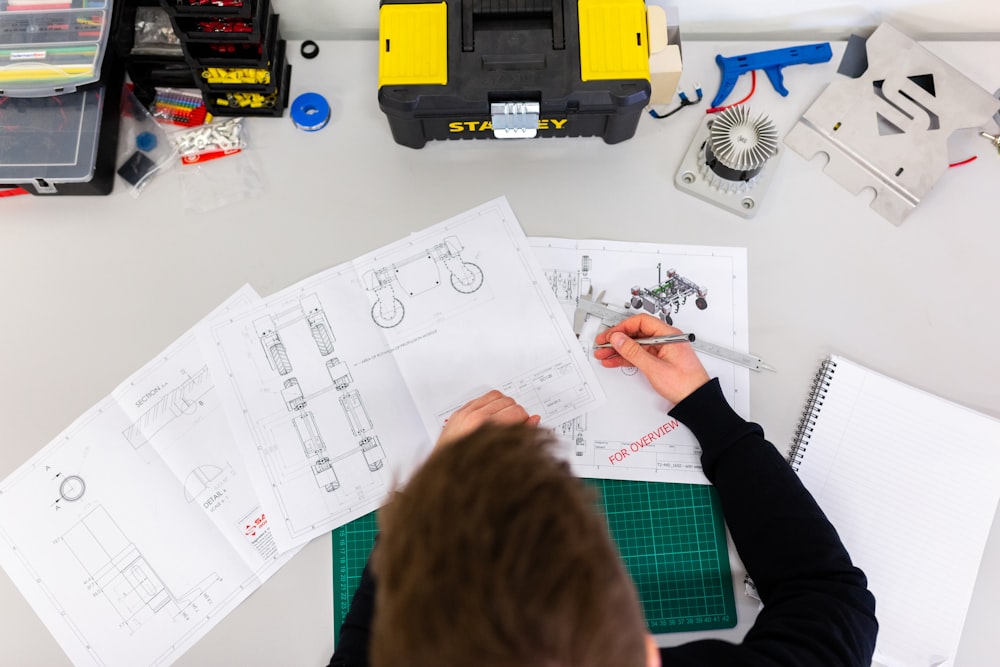
What you receive at closeout
- Certification report for every copper link
- Optical loss results for every fiber strand
- OTDR traces where Tier 2 applies
- Labeled as-built drawings
- Rack elevation drawings
- Port-to-outlet map
- Warranty registration confirmation
- Photos of finished closets
Cable labeling and documentation
ANSI/TIA-606-C is the administration standard, and it exists because of a simple observation: a network nobody can identify is a network nobody can fix. Every cable we install is labeled at both ends with machine-printed, permanent labels — not marker on tape — using a scheme that matches the patch panel, the outlet, the drawing and the port map. One identifier, four places, no ambiguity.
As-built drawings show what is actually there: outlet locations with their identifiers, pathway routes, telecom room positions, backbone runs and counts. Rack elevations show each rack unit, what occupies it, and how the panels map to the floor. Together they answer, in ninety seconds, the questions that otherwise cost a technician half a day.
Warranty and what keeps it valid
Manufacturer performance warranties on structured cabling systems typically run 20 to 25 years, and they are not automatic. They require an installer certified by that manufacturer, components from within the approved system, installation to the standard, and passing certification results submitted for registration. That last requirement is why "we'll skip the testing to save you money" is a warning, not a discount: without the test results, there is no warranty to register.
Our own workmanship warranty covers the labor. The manufacturer's system warranty covers performance of the installed channel. We register it, we give you the confirmation, and we keep a copy — because in year eleven, you will not know where you put yours.
"Testing is not the last 2% of the job. Testing is the evidence that the other 98% was done correctly."— Why certification is never an optional line item on our proposals
Different buildings. Different rules. Same standard.
Every environment below has a constraint that reshapes the cabling design. Knowing which constraint matters where is what twenty-five years in Atlanta buys you.
Warehouses & Distribution
High-bay geometry, fiber-fed zone IDFs, scanner coverage down every aisle, cabling that survives forklifts.
Corporate Offices
Density, phased cutovers, conference room drops, and enough spare capacity for the next reorganization.
Medical Facilities
Imaging bandwidth, uptime, infection-control-aware scheduling, and cabling that respects clinical space.
Manufacturing
EMI from drives and motors, shielded copper and fiber, production-schedule-driven work windows.
Schools & Education
Summer-window delivery, dense Wi-Fi, funding-cycle documentation, campuses tied together with fiber.
Government Facilities
Specification compliance, documented process, security-aware pathways, and audit-ready closeout packages.
Hotels & Hospitality
Guest and back-of-house networks, riser work in occupied buildings, per-room density, night-shift crews.
Retail
POS reliability, multi-site consistency, fast rollouts, and one standard across every location.
Airports & Transit
Badging, coordination with authority standards, long backbone distances, and work in live environments.
Property Managers
Tenant improvements, riser management, MPOE and MDF ownership questions, fast turns between tenants.
General & Electrical Contractors
A low voltage partner who shows up when the schedule says, submits what the spec requires, and does not create punch list items.
Managed Service Providers
The hands and the infrastructure behind your client commitments — white-label capable, documented to your standard.
Network Cabling Service Areas Across Metro Atlanta
Metro Atlanta is our home market — not just a line on a territory map.
There is a difference between a company that lists Atlanta on a website and a company whose trucks have been sitting in Atlanta traffic since 1998. We know which Alpharetta office parks have plenum ceilings and which have open decks. We know that a Marietta industrial building from the 1980s probably has a telecom "room" that is a closet with a mop sink in it. We know the loading dock rules at half the Buckhead towers.
That local knowledge is not trivia — it is schedule accuracy. It is why our estimates hold and why a crew that hits an unexpected condition at 9 a.m. is not sitting idle at 2 p.m. waiting on material.
We serve businesses across Fulton County, Cobb County, Gwinnett County, DeKalb County and the wider North Metro Atlanta corridor, including Alpharetta, Marietta, Roswell, Sandy Springs, Johns Creek, Norcross, Duluth, Lawrenceville, Peachtree Corners, Kennesaw, Decatur and Smyrna. For multi-site organizations, we deploy nationwide from our Atlanta base.
Cities we serve
Counties & corridors

When the network is down, every hour has a price tag.
Cut fiber, dead backbone, flooded telecom room, a trunk severed by another trade. We locate the fault, fix it correctly, test it, and tell you honestly what caused it — around the clock, across metro Atlanta.
Three Atlanta projects, and what actually made them work.
Every project has one decision that determined the outcome. These are ours.
A 200,000 sq ft distribution center where scanners died in half the aisles
The problem
Every access point was home-run in copper from a single office-side closet. The longest runs exceeded the standard by a wide margin, the far aisles dropped scanner sessions constantly, and the workaround had been to add more APs — which made it worse.
What we did
Re-architected around three fiber-fed zone IDFs placed by coverage geometry rather than by convenience, Cat6A to every AP inside a comfortable radius, deck-mounted pathways, and full certification of every link.
The decision that mattered
Moving the closets instead of adding hardware. The client had been buying equipment to solve a distance problem. No amount of equipment solves a distance problem.
A multi-suite medical office that could not take a single day of downtime
The problem
Aging Cat5e plant, an undocumented closet, imaging traffic saturating the network, and a clinical schedule with no available window — patients on site five days a week, every week.
What we did
Phased Cat6A overlay installed suite by suite after hours, new fiber backbone to a redesigned MDF, cutover per suite overnight, and a complete labeled as-built where none had existed.
The decision that mattered
Building the new plant alongside the old instead of replacing it in place. It costs more in patch panels and less in everything that matters.
A headquarters move with a fixed open date and a carrier that was not going to make it
The problem
New space, hard open date, cabling not started, phone numbers to port, and a fiber circuit ordered late enough that the carrier's install date landed after move-in.
What we did
Compressed cabling schedule with phased crews, MDF and IDF buildout, Cat6A throughout, cutover plan sequenced around the port, and a temporary path so day one worked while the primary circuit caught up.
The decision that mattered
Treating the carrier date as a risk to be engineered around rather than a fact to be reported to the client on move-in morning.
What Atlanta clients say after the ceiling closes.
4.9 out of 5 across 35 Google reviews. [REPLACE the three cards below with real review text and reviewer names from your GBP dashboard. Rating verified 2026-07-16 — refresh it, or render it live.]
[REPLACE — real review text about a warehouse or distribution project, ideally mentioning documentation or scheduling.]
[REPLACE — real review text about a relocation or office buildout, ideally mentioning the cutover going smoothly.]
[REPLACE — real review text about an emergency response or fiber repair, ideally mentioning response time.]
Read all 35 reviews on our Google Business Profile.
Frequently asked questions about network cabling in Atlanta.
Straight answers to what businesses actually ask us — including the questions that make a proposal look different once you know them.
Who is the best network cabling company in Atlanta?
How much does commercial network cabling cost in Atlanta?
Should I install Cat6 or Cat6A?
What is structured cabling, in plain English?
What is the 90-meter rule and why does everyone mention it?
Do you install fiber optic cable, and do you fusion splice?
What does "certified" cabling actually mean?
What is OTDR testing and do I need it?
How long does a commercial cabling project take?
Can you work after hours or in phases so we do not lose a day?
What documentation do we get when the job is done?
What warranty comes with the cabling?
Do you work with general contractors and electrical contractors?
Do you support managed service providers and IT departments?
Can you handle multiple locations outside Atlanta?
Our network closet is a disaster. Can you fix it without replacing the cabling?
Do you handle emergencies at night and on weekends?
How long has DataTel 360 been in business?
Do not see your question? Request a quote or call 770-441-9999 and ask a technician directly.
![[Name], [Title] at DataTel 360, Atlanta](https://images.unsplash.com/photo-1560250097-0b93528c311a?w=200&auto=format&fit=crop&q=80)
[Name], [Title] — DataTel 360
[REPLACE — 2–3 sentences of real biography: years in commercial telecom, certifications held (e.g. BICSI, manufacturer certifications), types of Atlanta projects led. This box is a primary EEAT signal and must be truthful and verifiable.]
Get a real quote from people who will walk your building.
Tell us what the space is for and when it has to work. We will handle pathways, standards, testing and documentation — and you will get an itemized proposal with no mystery allowances. Serving Atlanta business since 1998.